Commercial door replacement near me when it won’t close
June 22, 2026
Commercial Entry Door Repair: What to Expect
July 24, 2026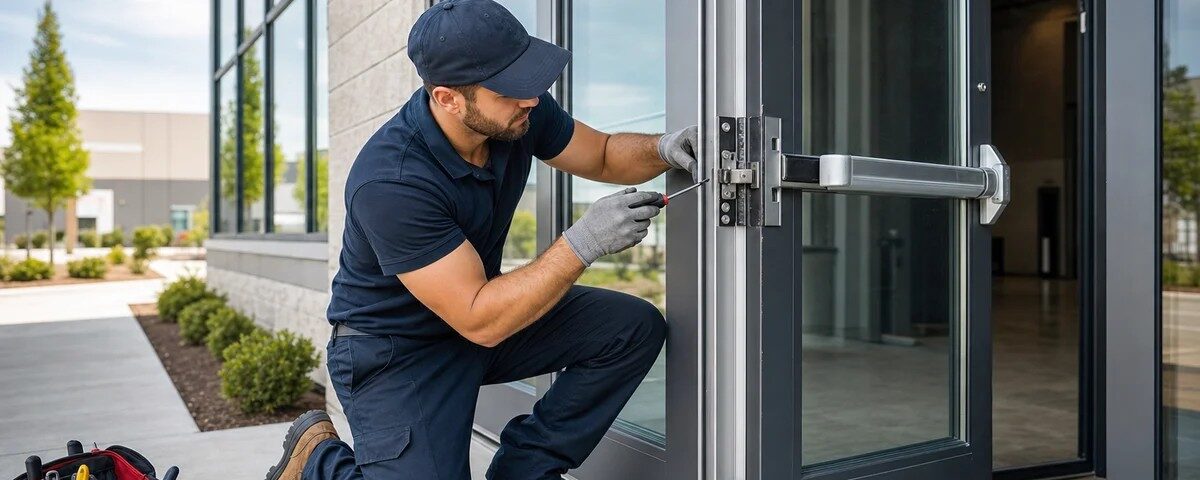
When a storefront door starts slowing down business
If you need commercial door repair in Katy, a commercial door that drags, scrapes, or sticks usually points to hinge wear or closer trouble, while a latch that keeps missing the strike often means the door has drifted out of alignment. When a door slams shut, the closer is usually failing or set too fast, and that can turn a minor nuisance into a security and access problem fast.
We see the business impact right away, weaker after-hours security, more HVAC loss, and friction at the front door when customers or staff have to shoulder the slab open. If the door is part of the exit path, ADA and egress concerns matter too, because a door that does not close or latch correctly can create a safety issue, not just a convenience issue.
Three urgent red flags are simple, the door will not latch or lock, the glass is cracked or loose, or the panic hardware or exit hardware is failing. If you are dealing with any of those, it should move to the front of the queue.
What commercial door repair usually covers
Commercial door repair often starts with the basics, aluminum storefront doors, hollow metal doors, glass entry doors, closers, panic bars, hinges, locks, thresholds, and weatherstripping. Those parts do most of the work every day, so even small wear can show up as a latch miss, a draft, or a door that will not close cleanly.
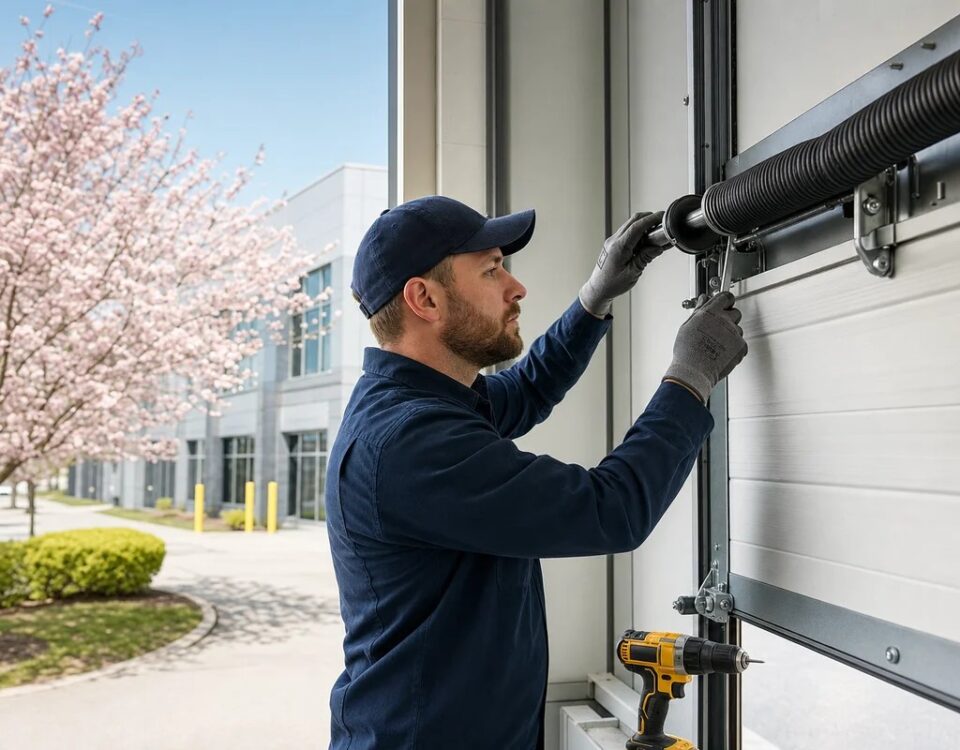
Heights Door Works, LLC handles these repairs as a practical hardware job first, then as a bigger structural issue only if the door has taken impact damage. Alignment and hinge work, closer adjustment or replacement, lock and latch correction, seal or sweep replacement, and door rehangs after a hit are the most common buckets.
The line between a normal fix and a bigger job is usually clear on site. A closer swap or latch correction is straightforward, but bent frames, cracked jambs, or damaged glass can add a second visit because those parts may need fabrication or special-order replacement.
How a commercial door service visit usually unfolds
A commercial door service visit usually follows a short, predictable path. First we identify the symptom, then we inspect the opening, then we repair what can be finished in one trip, and the typical on-site timeline for a standard issue is about 45 to 120 minutes.
During inspection, we check plumb and level, hinge wear, closer speed, latch alignment, strike condition, power to automatic operators, and exit hardware function. That sequence matters because the cause is often one step removed from the symptom, for example, a latch miss can come from a weak hinge side or a strike that has shifted a few millimeters.
A single-visit repair turns into a two-part repair most often for three reasons, special-order hardware, cracked glass, or frame damage that needs fabrication. If the correct part is not already on the truck, the visit becomes a return trip instead of a half-finished repair.
1. Share the symptoms and a few photos
Start with a 5 to 10 minute call or text triage, and tell us what the door is doing, whether it still opens, closes, and locks, and whether it is an entrance, exit, or employee-only door. Include a full-face photo plus close-ups of the closer, hinge side, latch edge, and any visible damage so we can narrow the likely parts before we arrive.
2. Check the frame, hardware, and alignment on site
Plan on a 15 to 30 minute inspection window for frame plumb, hinge tightness, strike alignment, closer arm tension, and whether the door self-closes to code. Parts availability is the biggest limiter, so the technician should know on site whether the fix is adjustment, replacement, or a return visit.
3. Repair, test, and confirm the door is safe to use
Common fixes usually take 45 to 120 minutes, including closer replacement, latch alignment, hinge tightening, or weatherstrip replacement. The final test should include opening and closing the door several times, confirming latch engagement, checking sweep and seal contact, and making sure the door no longer slams or sticks.
Repair now or replace the door later
For most business door repair calls, repair is the first move when the problem is localized to hardware or alignment. Replacement starts to make more sense when the slab is warped, the frame is bent, or the same failure keeps returning within 6 to 12 months. If the problem has moved past a simple fix, our door replacement page is the better fit.
| Factor | Repair | Replacement |
|---|---|---|
| Cost | Lower, usually parts and labor for one issue | Higher, because the slab, frame, and hardware may all change |
| Turnaround | Often one visit | Usually longer, especially if glass or framing is involved |
| Business disruption | Shorter interruption | More disruption, sometimes with temporary access changes |
| Lifespan | Best for isolated wear | Better for repeated failure or structural damage |
| Code or safety risk | Low if the frame is sound | Lower long-term risk when the assembly is deteriorated |
Closer and latch issues are usually repair jobs, while shattered glass, repeated sagging, or a damaged frame often push the work toward a rebuild or replacement. If the opening is still structurally sound, a targeted repair is usually the fastest path back to normal.
What speeds up a commercial door contractor visit
For a commercial door contractor visit, parts availability is the biggest factor, damage scope is the middle factor, and schedule or travel distance is the smallest factor. That ranking matters because a stocked closer or strike can be fixed quickly, while glass, frame, or specialty hardware can slow the whole job down. For broader issues, our door repair page covers the general service category.
Before the visit, send clear photos, door dimensions, hardware brand if visible, whether the door is stuck open or closed, and the business hours or access window. At Heights Door Works, LLC, we also offer free estimates, which makes it easier to compare scope before anyone rolls a truck.
Here are a few realistic on-site examples: closer adjustment can take 20 to 40 minutes, latch or strike realignment 30 to 60 minutes, and a hardware swap 60 to 90 minutes. Glass or frame damage usually extends beyond one visit because the repair may need matching, fabrication, or new parts.
Commercial door repair Katy questions business owners ask
What would push a commercial door repair into a second day?
A second day usually means the right part is not on the truck or the damaged section needs fabrication. Special-order parts, cracked glass, bent frame sections, and welded repairs commonly add a 24 to 48 hour wait.
Is a storefront door that slams shut an emergency?
Yes. If it slams and will not latch, it should be handled promptly. If it still secures, the issue is usually a failed closer or worn hinge hardware, but a door in the exit path still deserves quick attention.
Can panic bars and exit hardware be fixed on the spot?
Yes, loose bars, strikes, and trim are often repaired on site in 30 to 90 minutes when parts are available. Broken devices or code-related failures may need new hardware instead of a simple adjustment.
What should I send when I request commercial door service Katy?
Send photos, the address, door type, business hours, and whether the door is currently secure. The hardware brand or the opening width helps us quote the job more accurately before we visit.
Get the door working before the next rush
If your storefront door is slowing traffic, leaving the opening drafty, or refusing to latch, we can help you sort out the next step quickly. Heights Door Works, LLC handles commercial door repair in Katy with a practical focus on the actual hardware, and our free estimates make it easier to decide whether repair or replacement is the better move.
Contact us here to request a free estimate and get your door back to working the way it should.